
The Polish paradox: why the Center of Europe defies Western labels?
International investors often make a mistake when looking at the map of Europe. They see Poland as the eastern edge of the West. Or, worse, as the western edge of the East.
Let me prove you that both perspectives are wrong.
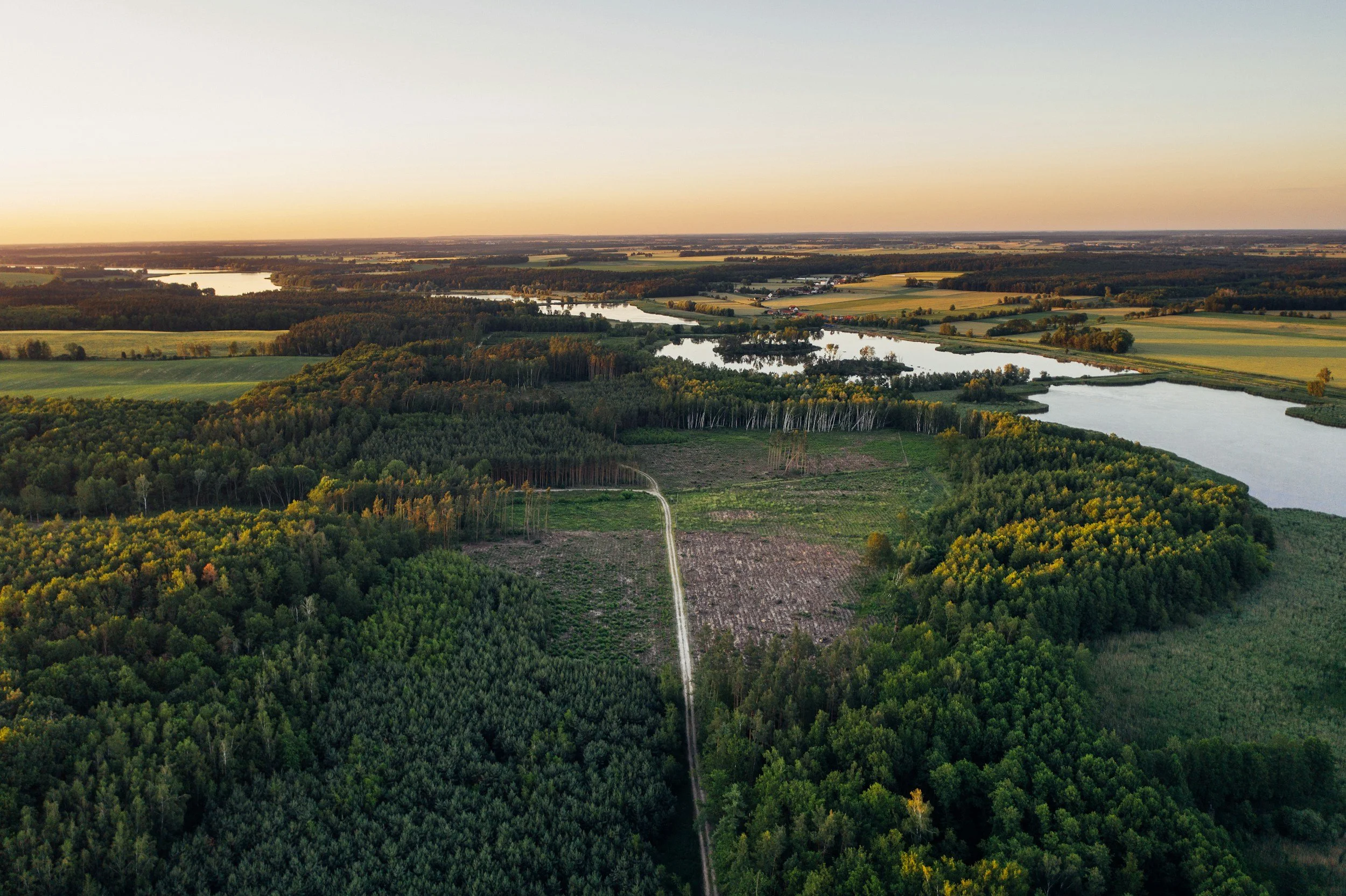
Poland is the Center. A distinct market with a social and economic fabric that refuses to fit into the standard templates of Berlin, London, or Paris.
It is February 2026. While the Eurozone economies struggle to hit 1.5% growth, Poland is tracking toward 3.7% GDP growth (source).
We are the engine, but here is the hard truth.
if you bring a generic strategy here, you will fail. To succeed, you must understand the Polish paradoxes. The unique contradictions that define this market and use them to your advantage.
Keep reading if you want to know three of them.
Paradox 1: The "Digital Leapfrog" (Why Your Tech Looks Old Here)
The first shock for many Western executives is that Poland is not "catching up" technologically. Because Poland had to rebuild its institutional and financial infrastructure entirely from scratch after 1989, it carried zero legacy debt. We skipped outdated technologies (like paper checks) and leapfrogged directly to the cutting edge solutions. Did you know that in many digital sectors, Poland has already leaped the West?
The reality: the state in your pocket
Foreign investors often expect to deal with a slow, paper-based Eastern bureaucracy. They are stunned to find a state digital infrastructure that makes Western Europe look ancient. In Germany or the UK, dealing with the tax office or city hall often still requires physical letters and in-person queues.
In Poland, over 95% of annual tax returns are filed electronically via the automated Twój e-PIT system. Over 10 million citizens use the mObywatel app. A legally binding digital wallet that replaces physical ID cards, driver's licenses, and medical prescriptions. We don't stand in a queue at the municipal office, because we can easily book exact slot online, authenticate with a Trusted Profile (Profil Zaufany), and sign contracts digitally using the eDO App.The implication: the digitally spoiled consumer
This digital reality extends to the private sector. Poland is a cashless vanguard. By the end of 2024, the homegrown mobile payment standard BLIK processed nearly 3 billion transactions, dominating the economy and bypassing traditional global card networks. Because both the Polish state and local banks offer a frictionless, mobile-first UX, the Polish consumer's baseline expectation is terrifyingly high. We are accustomed to opening bank accounts via facial recognition on a Sunday, securing loans in 30 seconds, and pick up parcels at 2:00 AM by using our own smartphone (without touching parcel box, obviously).
Let’s face it, we are a digitally spoiled consumers. If you want to earn our money, you must play our tech game.The trap: the legacy checkout
This is where global brands bleed revenue. A Western company will often deploy its standard e-commerce platform in Poland. But if the Polish government can process complex taxes in three clicks, why does your checkout process require five steps and a manual 16-digit credit card entry? To a Polish buyer, a non-localized, clunky digital experience feels like stepping back into the early 2010s.
If your digital experience isn't flawless, localized, and instantly integrated with local tech, your platform isn't an upgrade for us. I would even say, it’s a downgrade. Don’t do it to us.
Paradox 2: The Pragmatic Traditionalist
Socially, Poland walks a tightrope that baffles foreign observers. We are a nation that eagerly consumes global trends—we are digitally native, open to the world, and highly individualistic in our ambitions (source).
And yet, we remain distinct in our foundations.
This creates a unique profile. I call Poles: The Pragmatic Traditionalist. Who is this persona?
The profile: digital ambition meets family security
If you look at consumer sentiment data from groups like the Polish Public Opinion Research Center (CBOS), a clear picture emerges. While nearly 80% of the population actively utilizes advanced e-commerce, when asked about core motivators, "family happiness" and "security" consistently rank as the absolute highest values for more of Poles, while individualistic status symbols like fame and career rank at the bottom. A Polish consumer might work in a glass skyscraper and trade crypto on their phone, but our largest purchasing decisions are driven by the household's long-term security. We buy for the nest, not just the ego.The behavior: the art of smart shopping
In the West, convenience often overrides price. In Poland, consumers demand both. McKinsey & Company reports have continually highlighted the Polish obsession with smart shopping (sprytne zakupy). This does not mean we only buy cheap things, obviously.
It means we are ruthless value-maximizers. A Polish consumer will happily pay a premium for a high-end foreign brand, but we will use three different price-comparison engines to find the best deal. Furthermore, the Gemius E-commerce 2025 Report shows that 83% of Polish online shoppers demand delivery to an InPost parcel locker ASAP.
We love innovation, but we have zero tolerance for friction or being overcharged.The trap: the activist brand misfire
This is where Western marketing budgets go to die. Brands often try to import polarized, "purpose-driven" marketing campaigns directly from the US or UK, assuming the Polish consumer wants to be part of a global culture war. Believe me, we don't.
According to the Edelman Trust Barometer, business is viewed globally as the only institution that is both competent and ethical. In a polarized market like Poland, consumers expect businesses to solve problems through operational excellence, not by taking sides in ideological debates. If your marketing preaches social causes, but your customer service is slow or your app crashes, you will be ruthlessly mocked. The Pragmatic Traditionalist doesn't want a lecture with their product. We want uncompromised quality, respect for our intelligence, and modern convenience. That’s all. No beautiful packed ideology.
Paradox 3: The end of cheap labor
Ten years ago, the strategy for entering Poland was simple: labor arbitrage. You came here because smart people were cheap. You opened a Shared Service Center (SSC) center or hired a BPO vendor, hired a hundred people to type data into Excel, and saved 40% on your operational costs.
In 2026, that game is completely over. The Polish market has evolved from transactional SSCs into advanced Global Business Services (GBS) and Centers of Excellence. If you are looking for the lowest cost, look elsewhere. Smart investors come to Poland for value and velocity.
The talent: the engineering elite
Poland has quietly built one of the most lethal technical workforces on the planet. The country produces over 70,000 IT and engineering graduates annually, accounting for nearly half of all STEM graduates in Central and Eastern Europe.
But it is the quality, not just the quantity, that matters. In global, unbiased technical assessments, Polish developers consistently crush their Western counterparts. According to HackerRank’s global developer assessment, Poland ranks 3rd in the world for overall programming skills.
You are not hiring junior coders here. You are hiring global elite problem-solvers.The shift: from back-office to R&D engine
Global capital has already recognized this shift. Poland is no longer the "back office" of Europe; it is the R&D lab. This is proven by the EY Europe Attractiveness Survey, where Poland recently leaped to 6th place in Europe for overall Foreign Direct Investment (FDI) attractiveness, and 4th in Europe for the number of new jobs created by those investments. The biggest tech titans aren't coming here for tax breaks. Microsoft’s massive $700 million (2.8 billion PLN) investment to expand its Polish hyperscale cloud and AI infrastructure by mid-2026, alongside Google's multi-billion dollar cloud regions in Warsaw, prove one thing.
Tech giants are building the future of global AI here because Polish talent executes faster and better.The trap: the offshore" mindset
The biggest execution gap for foreign companies is cultural management. Western companies often arrive in Poland with a rigid, hierarchical "sweatshop" mentality, treating their Polish office as a subservient execution arm of London or New York HQ. If you come here hiring for "hands" and tell them exactly what to do, you will face massive turnover.
Polish professionals are highly educated, deeply analytical, and impatient with corporate bureaucracy. If you come hiring for "heads", giving Polish teams autonomy, complex problems, and a seat at the strategic table, you will unlock a level of productivity and innovation that is increasingly rare in the West.
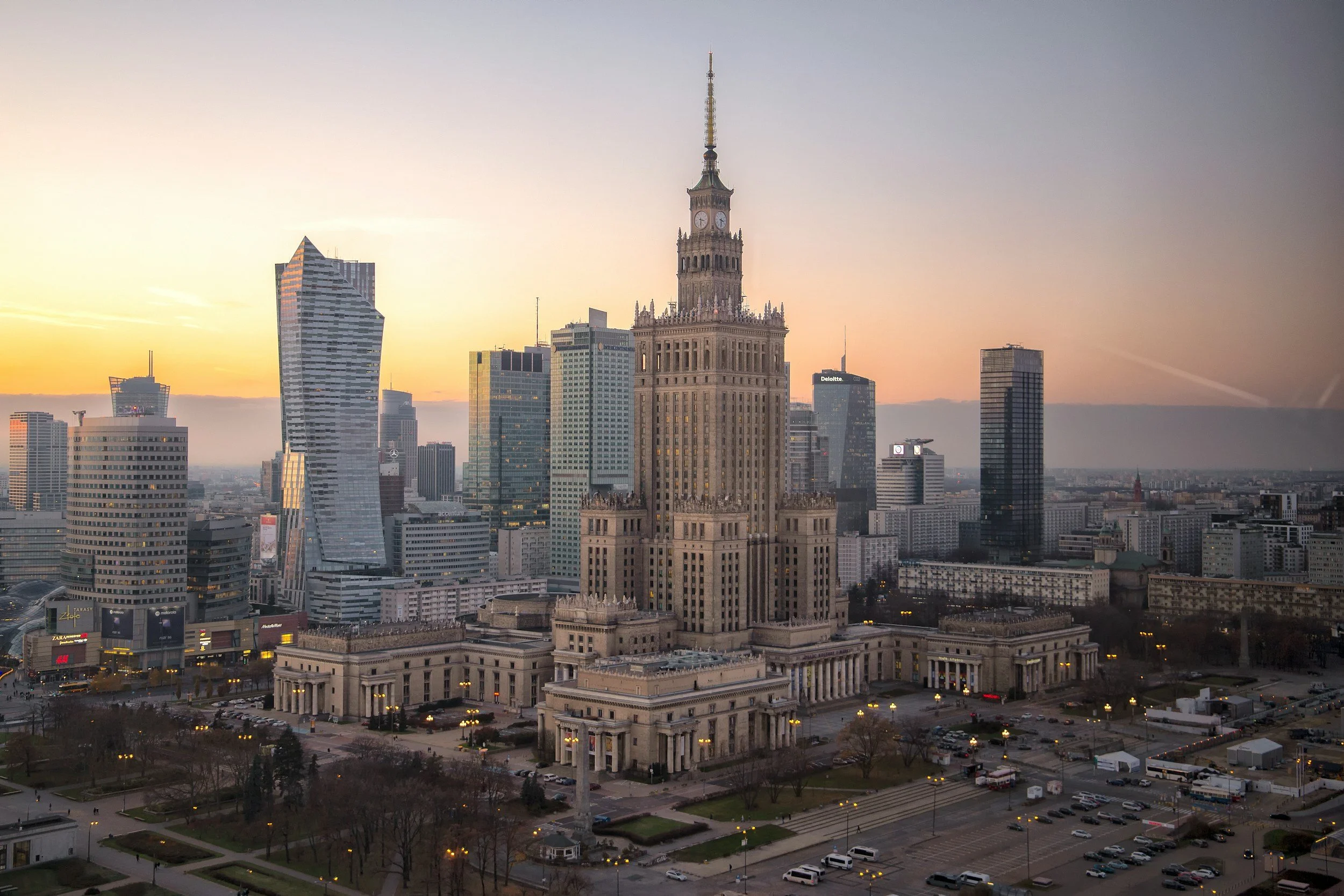
You need a translator. Not a manager.
If you have read this far, you already realize that treating Poland like just another box on a European expansion checklist is a mistake. So, what does this mean for you as a foreign investor or expansion leader?
Poland is no longer a "developing market." It is a mature, complex, and high-stakes arena. It is the place where Western capital meets Eastern resilience and velocity. If you plan to enter this market, leave the playbook written for Germany or the UK at home. You need a strategy that respects our central position, a strategy that understands we are aggressively open to the new, but fiercely loyal to the old.
This is where TRBK steps in. A successful market entry requires much more than just registering a local legal entity and translating your website. I build the operational infrastructure and commercial tech stack that aligns with this specific reality, designed specifically to meet the high expectations of the Polish consumer. I act as your cultural and operational translator, helping you navigate the local nuances so you don't burn your budget on strategies that were dead on arrival.
Growth in the Center of Europe is waiting. But it belongs to those who understand it.
Are you sure your global playbook will work here? Connect with me to align your brand and operations with the Polish reality before you launch.